
Our Work
We research how to preserve coral reefs in the face of our increasingly inhospitable climate.
Read about our success!
Our research focuses on using marine electrolysis to enhance reef resiliency. We create quantifiable evidence of how electrolysis increases coral growth and health and develop open-source protocols and experimental designs for broader scientific use.
LATEST POSTS
-
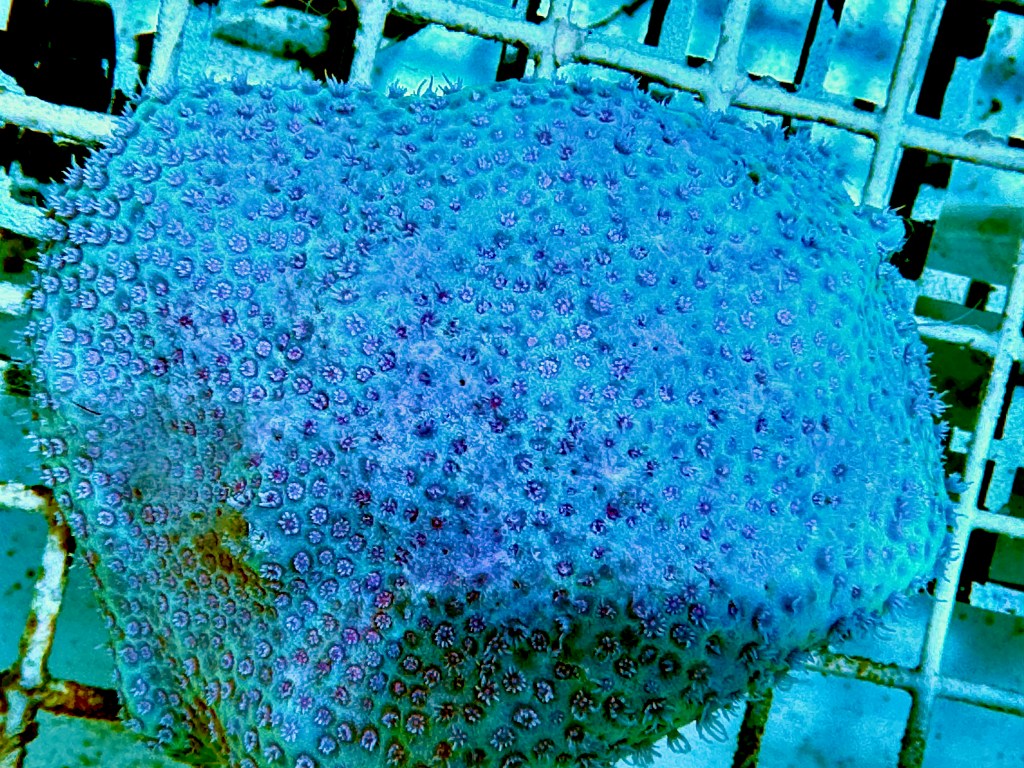
Ground-Breaking 17-Month Study Overcomes Barriers To Enhanced Coral Growth And Resilience Using Seawater Electrolysis In Closed Aquariums
I set out to explore how low-voltage electrolysis impacts coral growth and resilience in a closed system. Finally, after learning from many failures and nearly giving up, I found a way forward and achieved successful results.
-

My Most Recent Experiment Failed. Why?
My experiment using electrolysis on coral went wrong. Activated carbon mistakenly acted as an electrode, deionizing the water and causing a drop in sodium and chlorine levels. I have two solutions that might work.
-
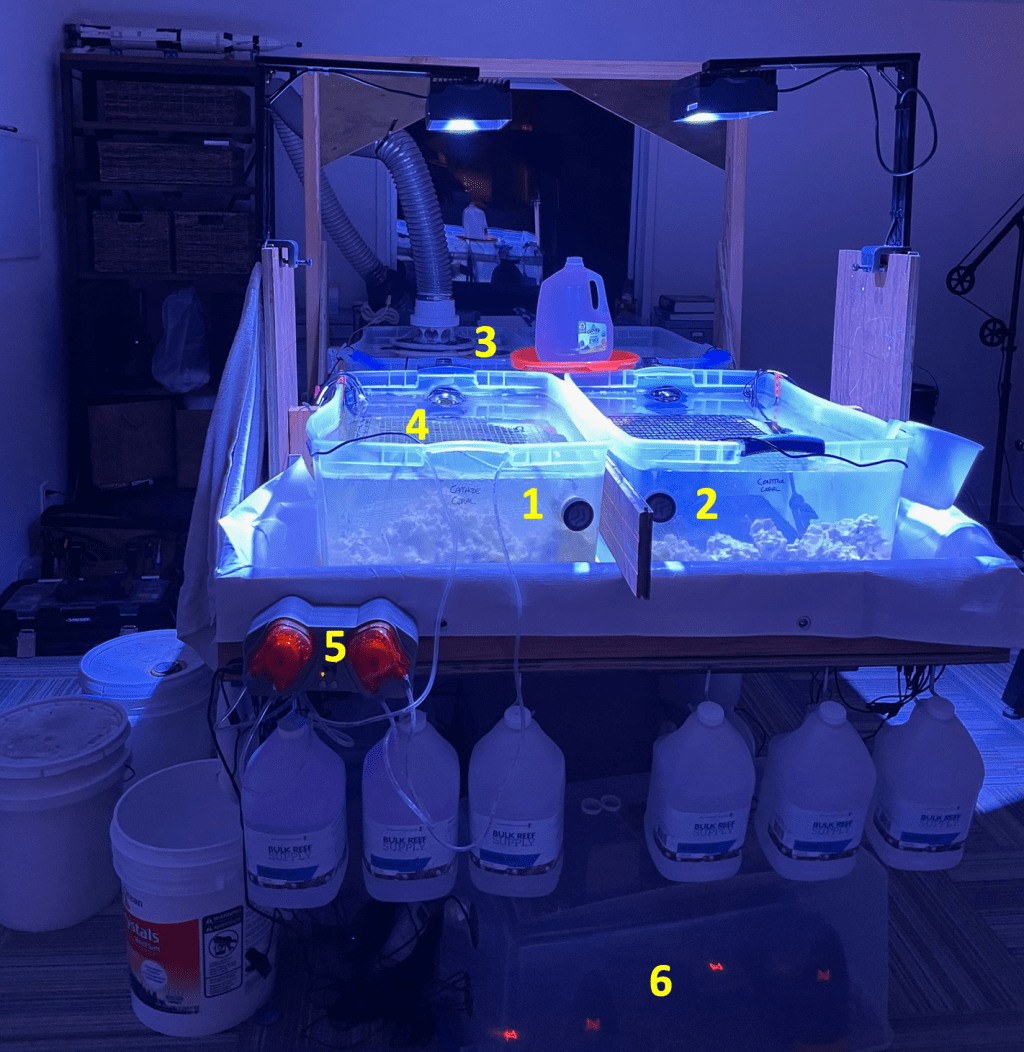
Electrolytically Enhanced Coral Reef Growth In A Closed Environment
Coral reefs face decline due to environmental degradation. Utilizing electrolysis to grow coral in a controlled environment can protect and revive reefs more effectively.
-
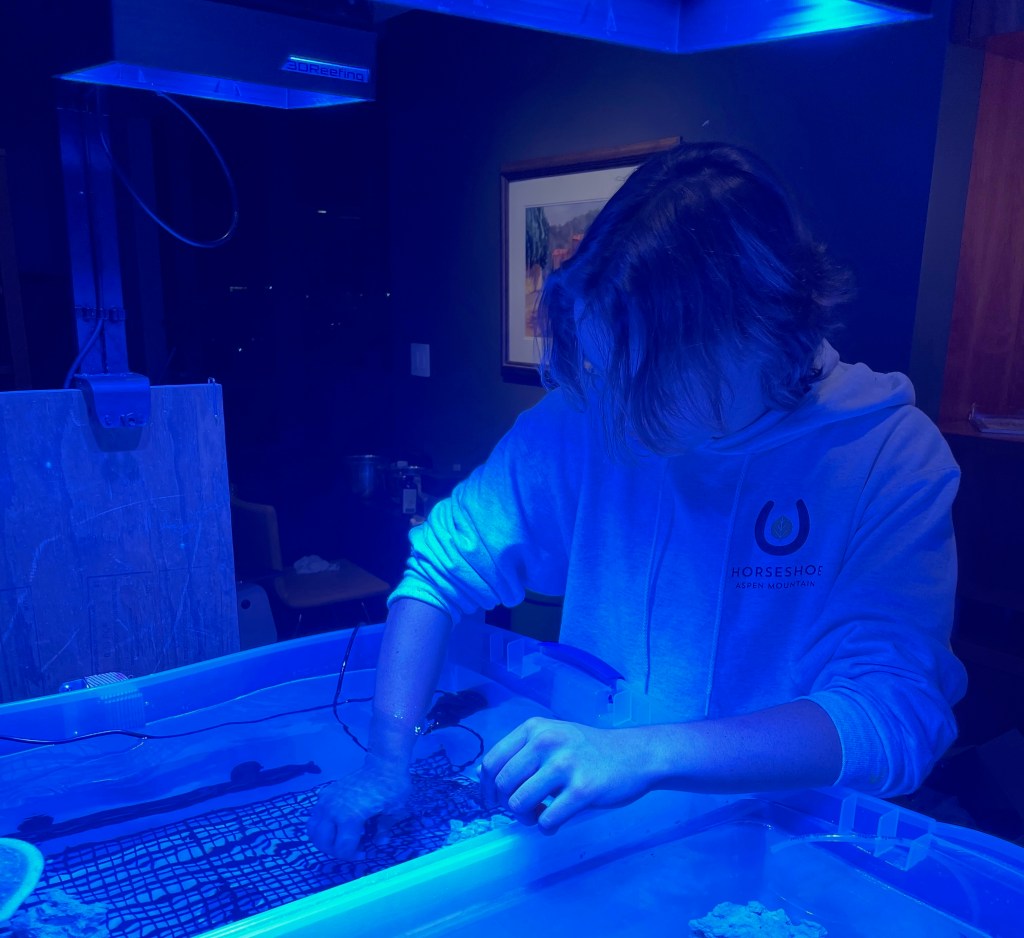
My Coral Reef Low Voltage Electrolytic Cell Aquarium Build
My experimental tanks are up and running, with the first few pioneering corals still alive after several weeks. Here’s a quick photo recap of the build process from the past few months.
-

Exploring The Diverse Ecosystem Of The Salish Sea
Coral reefs are remarkably diverse, but not all ecosystems rely on coral to thrive. For example, the cold Salish Sea is a hotbed of marine life and is home to many creatures.
-
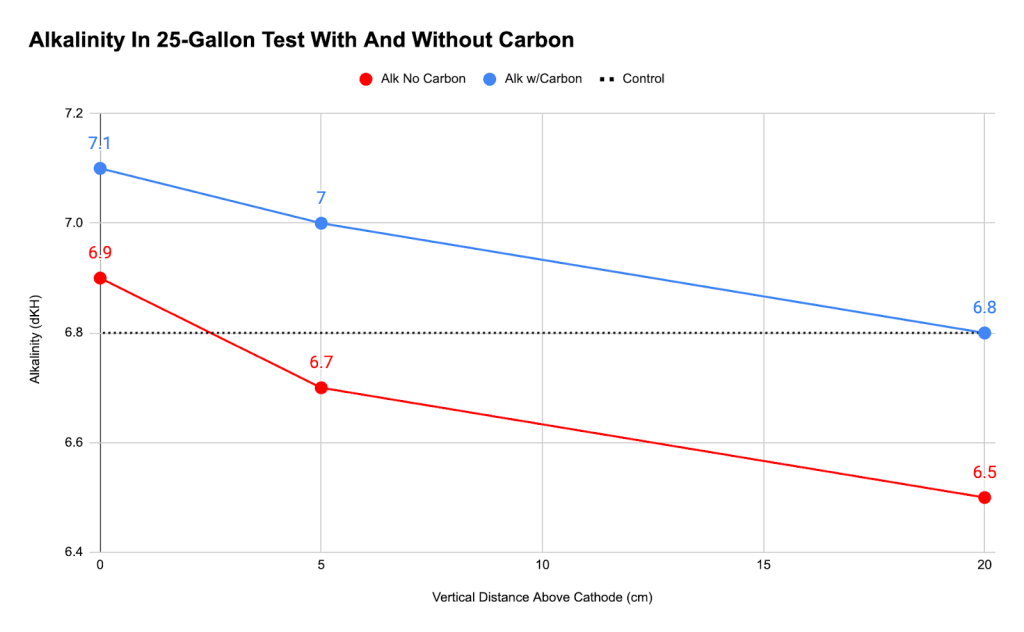
Experimental Results #1: Seawater Electrolysis, Alkalinity and Chlorine
These results prove our updated hypotheses: low voltage electrolysis raises seawater alkalinity in a closed system if the chlorine gas produced is adsorbed by activated carbon, and the alkalinity increase happens fast and is greatest near the cathode.
Read more blog posts
Subscribe
Sign up for a free newsletter with the latest blog posts and exclusive content.
 Resilient Reef Research